Accelerated vesting lets an employee own their award sooner than the original vesting schedule allows, once a named event happens. In most plans, that event is the sale of the company. For a small business owner, the clause decides what a key person walks away with when the business changes hands.
We are Reins, and we help owners give key people a stake in the business through phantom stock and profit sharing. This guide explains how accelerated vesting works, which triggers to choose, and how the MARE Stock Plan handles it.
What is accelerated vesting?
Accelerated vesting vests an award early when a named event occurs. Most awards vest over time, on milestones, or both, and acceleration moves some or all of the unvested part forward when that event happens. Without it, an employee two years into a four-year schedule could lose half their award in a sale.
In this guide, vesting and accelerated vesting refer to phantom stock. The same idea applies to stock options, where acceleration makes options exercisable sooner.
Single trigger vs double trigger accelerated vesting
A single trigger clause needs one event, such as the sale of the company, to vest the award. A double trigger clause needs two events, such as a sale and the employee losing their job within a set period after it. The table shows how they compare, and the Morrison Foerster explainer covers the legal side.
How a single trigger works
Take an employee on a four-year vesting schedule with a clause tied to the sale of the company. Two years in, the company sells to an outside buyer.
The employee vests 100 percent of their award on the sale, even though they have served only half the schedule. The sale of the company is the single trigger used most in the MARE Stock Plan.
How a double trigger works
Use the same example, with a second condition: the employee must also be terminated within six months after the sale. Both events must occur before the award vests in full.
This gives the employee a reason to stay with the buyer after the sale, which helps both buyer and seller. It also protects the employee if the new owner lets them go.
What happens to accelerated vesting upon termination?
Only the exits the plan names accelerate the award. Without a clause, unvested awards are forfeited when employment ends. A plan can name the exits that should still vest the award, such as death, disability, retirement or a termination without cause.
Termination for cause is the exit that plans leave out. An owner who wants to reward loyalty without rewarding misconduct writes the conditions so that only the exits outside the employee's control accelerate the award. In a Reins plan, you choose which of these exits apply, and the plan documents are written to match.
Accelerated vesting in the MARE Stock Plan
The MARE Stock Plan includes five standard accelerated vesting conditions. Owners choose which ones apply and set the details, such as how many months after a sale an employee must stay, or what retirement age counts. Custom conditions are also available.
The five standard conditions:
- Employee is employed on the date of a sale
- Employee is employed on a date that is a specified number of months following the date of a sale
- Employment ends before a sale due to death or disability
- Employment ends before a sale due to termination of employment for a reason other than cause
- Employment ends before a sale due to retirement after a specific age, as long as they have been employed for a specific number of years
Want to see which conditions fit your key people? Book a Reins demo and we will walk through a plan for your business.
How to handle accelerated vesting on a stock plan
Handle accelerated vesting by deciding it when you write the plan, not when a buyer appears. Pick the triggers, define what counts as a sale, set the post-sale period, write the termination rules and model the cost. These five steps take one planning session and save hard conversations later.
- Pick your triggers. Choose single trigger for people whose work built the value being sold, and double trigger where you want the team to stay through a transition.
- Define the sale. Say whether a sale of most assets counts, or only a sale of the company's shares.
- Set the post-sale period. Decide how many months an employee must stay after a sale for the award to vest.
- Write the termination rules. Name each exit that accelerates the award, and leave termination for cause out.
- Model the payout. Work out what the business owes if every award vests on the same day, so a sale price covers it.
Our guide to phantom stock vesting schedules covers the base schedule that acceleration sits on top of.
Why accelerated vesting clauses matter to employees
An acceleration clause tells a key person that a sale will not wipe out what they have earned. Without one, the people who built the value of the business carry the most risk when it sells. The clause also makes your employee incentives easier to explain when you hire.
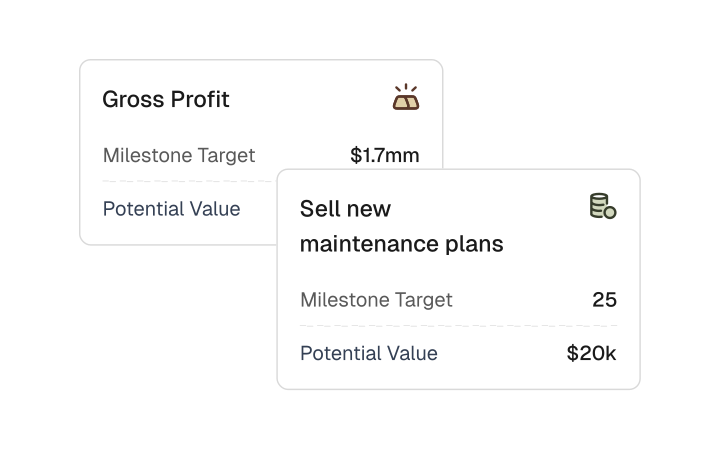
The award only motivates people if they can see it. In the Reins app, each person sees what their award is worth and how close the company is to each target.
Ready to give your key people a stake that holds up through a sale? See how Reins plans work for your business.
FAQ
What is an accelerated vesting clause?
The clause names the events that vest an award early. It is part of the award agreement, and it sets out the trigger, how much of the unvested award vests, and any time limits, such as a termination within six months of a sale.
What is the difference between single and double trigger acceleration?
Single trigger needs one event; double trigger needs two. Single trigger acceleration vests an award on a sale, while double trigger also needs a termination after it. Double trigger keeps the team in place for a buyer, while single trigger rewards people at the moment of the sale.
How does accelerated vesting of stock options work?
Acceleration makes unvested options exercisable sooner. The holder can then buy shares at the set price. With phantom stock, acceleration vests the cash value of the award instead, and no shares change hands.
Does accelerated vesting apply if an employee is fired?
Only if the plan names termination without cause. Plans leave termination for cause out. In a double trigger plan, a termination without cause after a sale is the second trigger.
Is accelerated vesting good for a small business?
Yes, when it protects the people who build its value. It also keeps them through a sale. Choosing the triggers and writing them down at the start keeps the cost known and the promise clear.